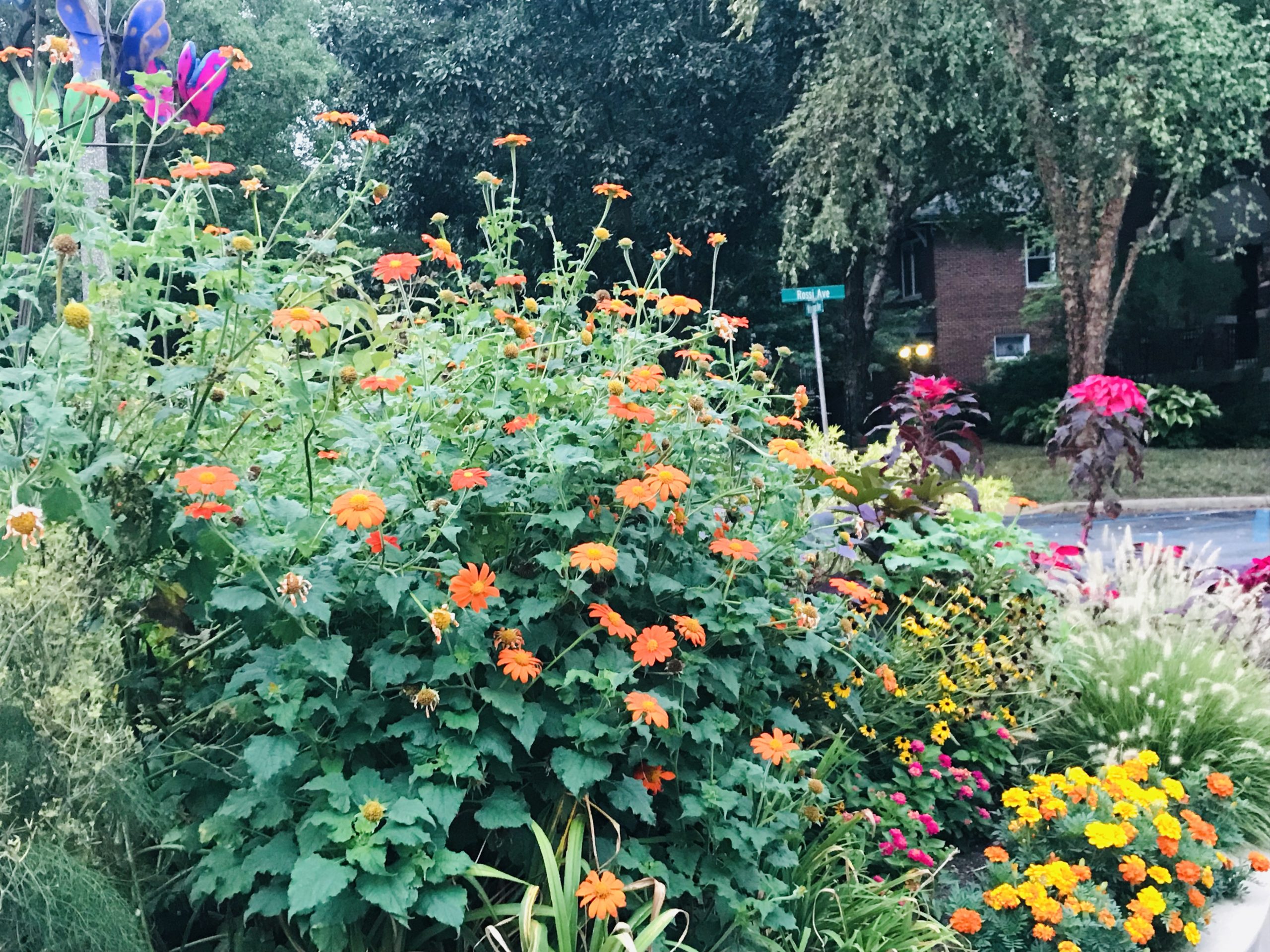
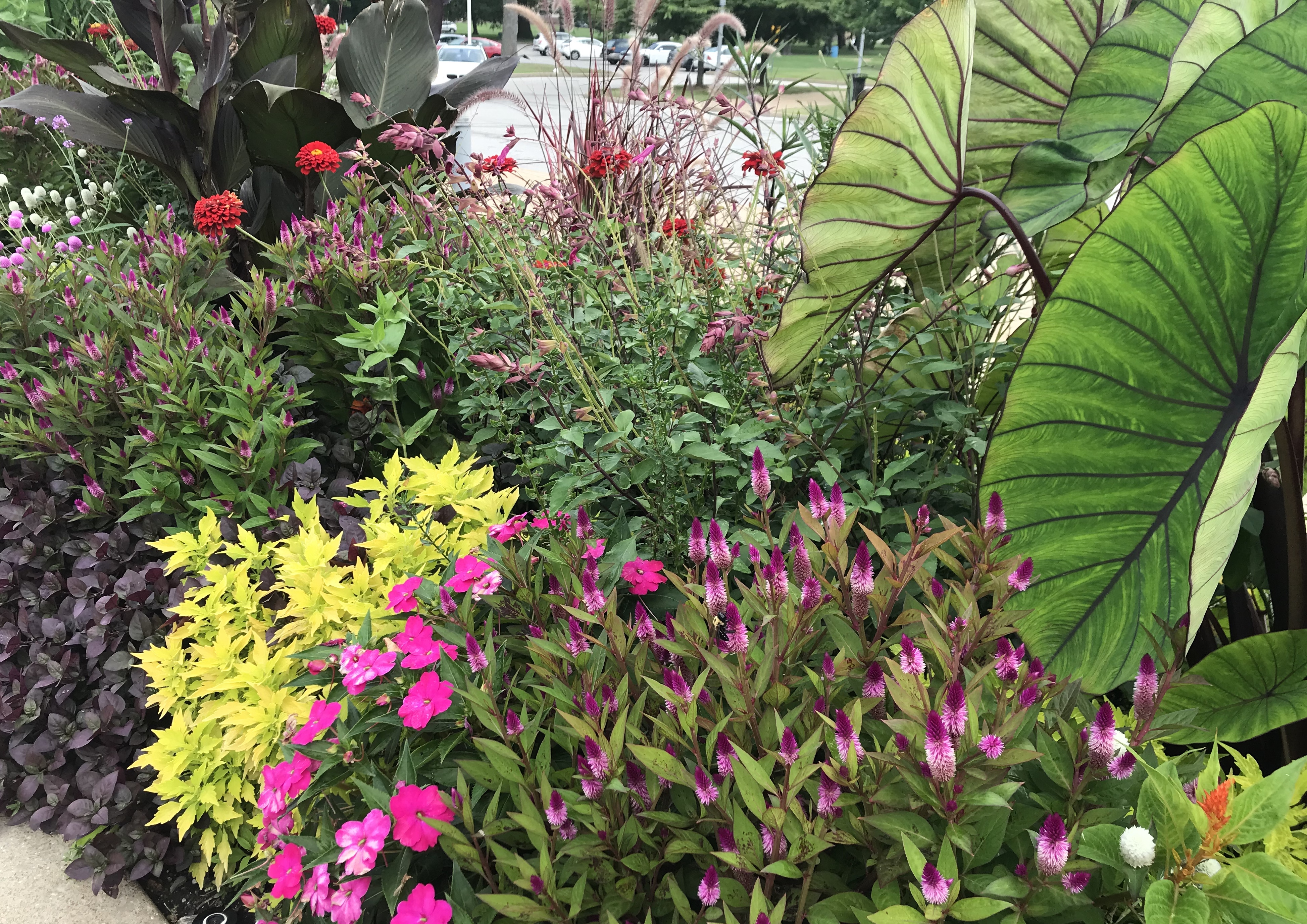
 Just about every time I am gardening in front of Centennial Commons, I am asked by passersby about designing this garden each year. To be honest, I find the most challenging designs to be full annual displays like this one. We have them in high impact spaces near important buildings and intersections or pedestrian areas, so they need to perform well and delight the eye. With so many plant choices out there, it can be tough to find a place to start. These designs don’t happen overnight. All year I am looking for inspiration and new plants and then let that incubate before I can sit down at the drafting table.
So, here is what I do.
First thing, I decide on a color palette. Color can grab the eye and  set a mood. It is the most important element used in designing with annuals. I find inspiration in paintings and container plantings I see in gardens and magazines. Sometimes there is a special plant I want to use so I will find a compatible color combo to work with just that plant. Then I pour over catalogs and magazines for interesting plants and list them by color.
I ask myself who the audience is and how are they using the space. If this is to be mostly viewed by passing motorists I know to simplify to just a few plants that are bold in color and texture and to plant in big groups or drifts easily seen at a glance or from afar. Visitors walk through and enjoy the Centennial Commons garden up close on their way in and out of the building and it can also be viewed from a distance in the parking lot and from Olive Boulevard. Therefore, I use bold colors along with many sizes, shapes and textures. Even scent can be utilized in an intimate space like this.
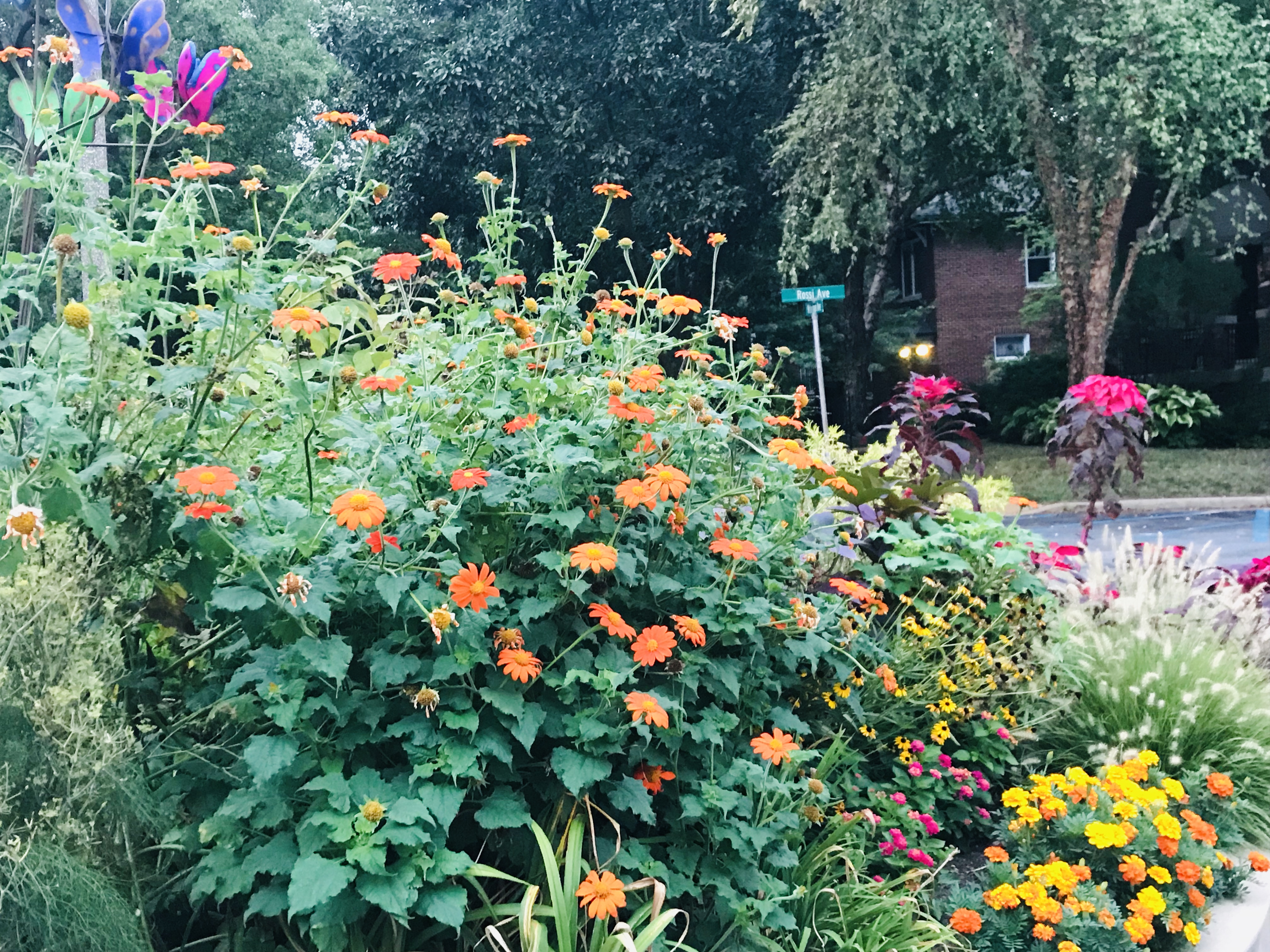 One mistake that is easy to make is putting all the large plants in back, the medium in the middle and the small plants in front. If you want your garden to be boring and static this works. So, I imagine that the bed will be viewed from both sides. Once color is decided start with placing the bones of the space. These are the visual specimens like ornamental grasses, and bigger tropical plants like Cannas and Elephant Ears to provide the structure and set the tone for the rhythm of the plants that will dance around them with repetition and contrasts of color and form. The medium and small plants do this in groups of three to five and sometimes run in a broken line through the bed. I choose plants I know are tough and will perform and then I add one or two new ones I am unsure of, just so I can try them out. Once the plants are picked I order a little more than what recommended spacing calls for so we plant a little closer so they fill in for quicker impact in the display. If the new trial plants don’t perform they are easily removed or allowed to be swallowed up by the sturdier plants next to them.
My predecessor MaryAnn Shaw often said our gardens should be presented as a bouquet. I love that and it sits with me when visualize a garden design and helps me to honor the legacy we all share with U City in Bloom and our special gardens.