There’s no doubt that water is a precious natural resource but it can also be a tremendously destructive force as late July’s record-setting rainfall and flash floods demonstrated.
As a NatureScaper helping to rid Ruth Park Woods of invasive plants, the recent floods also have me reflecting on the water absorption powers of trees. According to the USDA, trees are veritable sponges! One large tree can capture and retain hundreds of gallons of water. I wonder how many gallons are captured by all the large, mature trees in Ruth Park Woods as well as those in our parks and lining our streets?
How do trees manage to suck up so much water? They do this by holding onto some of the rainwater on their leaves, stems and branches, preventing it from reaching the ground. If you’ve ever taken refuge under the canopy of a large tree during a rain shower, you will have experienced this for yourself. Some of that rainwater will evaporate once the sun comes out while the rest will drip to the ground and be absorbed by the tree’s roots which help water seep into the soil and also prevent the soil from washing away in big storms. A thick mat of fallen leaves under trees also plays its part by allowing water to seep into the soil slowly rather than rushing off to wreak havoc. Learn more on the EPA website.
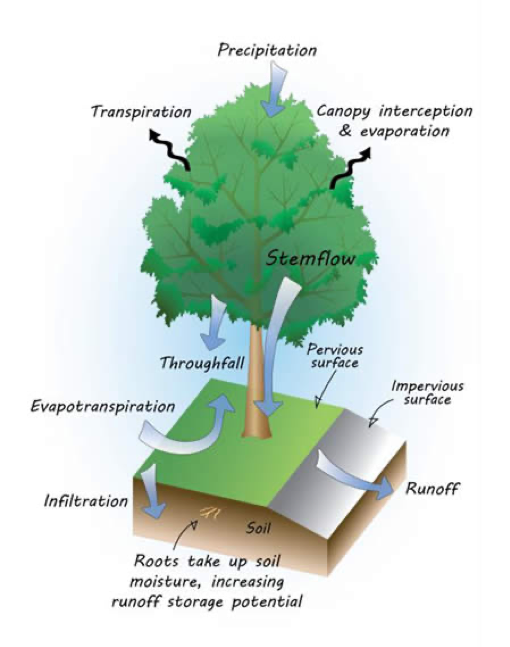
Diagram of how trees help manage rainwater
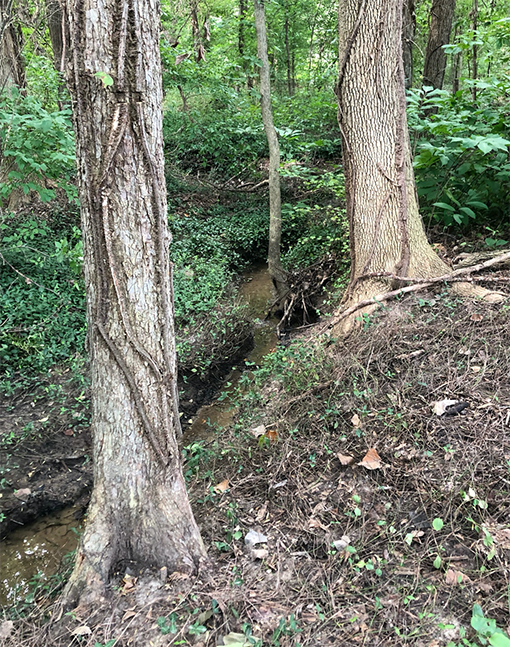
Trees absorbing water & helping to maintain the edges of a stream bank in Ruth Park Woods.
While we’re talking about stormwater management, let’s not forget the role of the rain garden in our beautiful Bird Garden. The rain garden is like a pond that doesn’t contain water most of the time. It was designed to temporarily corral stormwater so that it can drain into the soil within 24 hours and not create a breeding site for mosquitoes. Kathy looked at it two days after the rain and … no standing water. The rain garden is full of deep rooted native plants that can tolerate brief periods of standing water and drought. These are talented plants indeed! The stems, leaves and flowers hold rain drops above the soil for hours. Many native plants in all areas of the Bird Garden have roots that reach far down into the ground, allowing rainwater to percolate deeply into the soil where it’s available to the plants themselves.
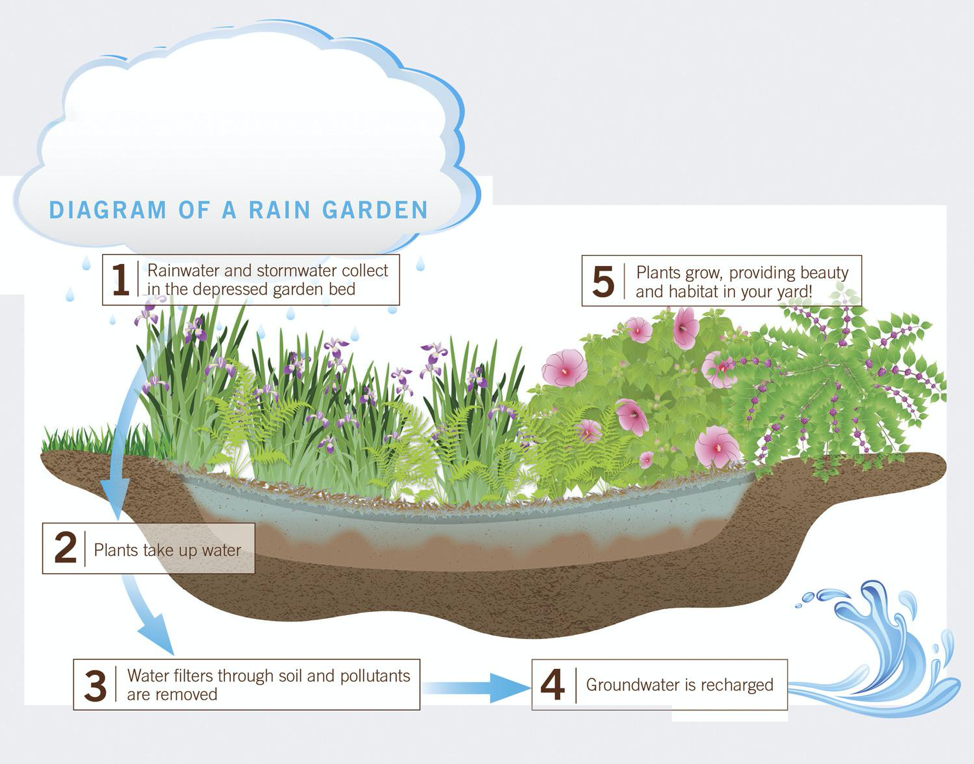
Diagram of a rain garden
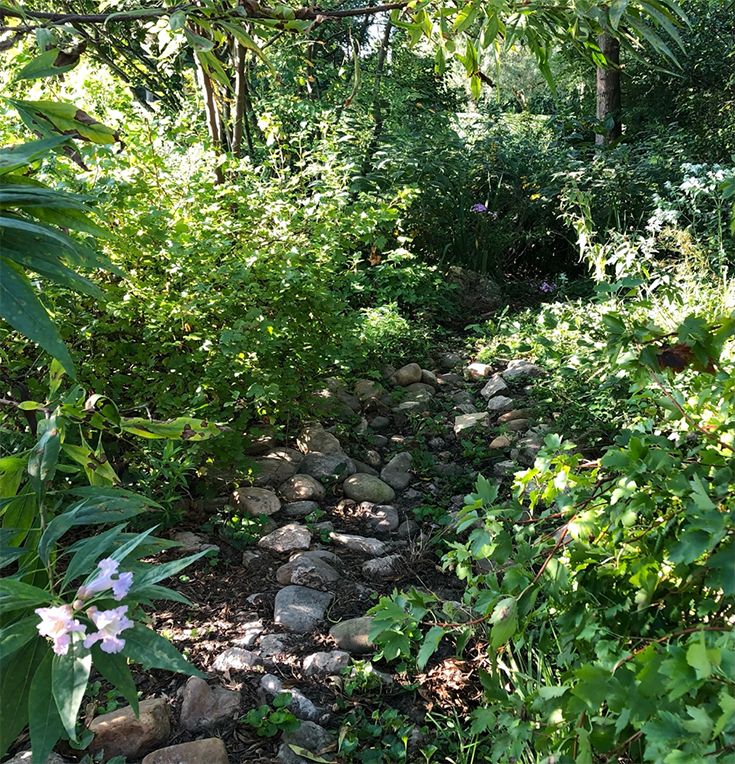
This shows the entrance to the rain garden at the Bird Garden. The large river rocks direct & slow down runoff from the parking lot. It’s very lush!
Contrast these scenarios with a well trimmed lawn. Turf grasses are shallow rooted and not at all adept at soaking up rainwater. Several years ago, I watched a demonstration of how rainwater behaves when it falls on various surfaces. Whereas all of the water was absorbed into a prairie landscape, it ran off the lawn grass almost to the same extent as from a completely impervious surface.
Development creates plenty of impervious surfaces — driveways, parking lots, roads and the frequency and severity of storms are on the rise. We will need LOTS of solutions to our stormwater management problems. If rain gardens and native plant gardens of all kinds were as plentiful as lawns, don’t you think they would provide one of the solutions and a beautiful one at that?
For more details about trees and rainwater, see https://www.srs.fs.usda.gov/compass/2018/01/11/urban-forests-stormwater-management/
For information about rain gardens, check out the Missouri Botanical Garden website.
Check MSD’s website if you’re interested in applying for grant funds to help cover the cost of installing a rain garden.
The National Tree Benefit Calculator and/or iTree will give you an idea of the annual economic & environmental benefits of trees.
Barb & Kathy