An Ode to Giant Coneflower:
Most garden centers today offer a lot of great options for people that want short perennials. But, what about plants that make us tip our heads back to look up instead of down? Do these plants deserve a spot in the garden? They certainly do! Tall plants offer excitement, drama, and intrigue to a garden. One such plant that I’m particularly fond of is an herbaceous perennial called giant coneflower, otherwise known as Rudbeckia maxima. You may ask, “Is that related to purple coneflower?” Actually, this plant is more closely related to black-eyed susans like the old standby ‘Goldsturm’. However, if you saw ‘Goldsturm’ and giant coneflower side-by-side, you wouldn’t even think the two were related.

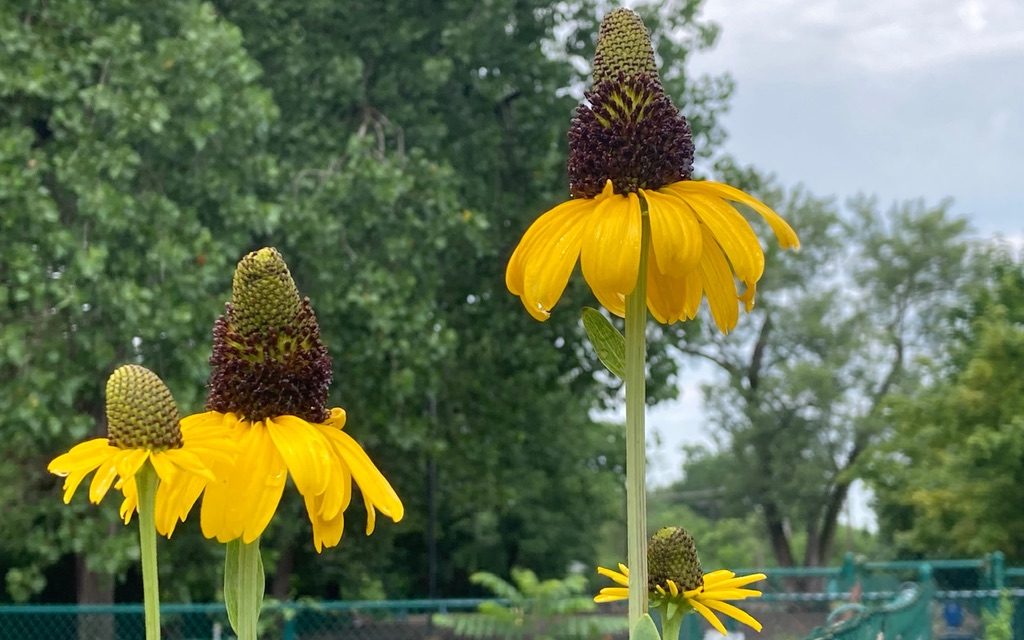
In all respects, it is a unique plant with many charming qualities. In spring, it forms a low mound of coarse-texture foliage that is a beautiful blue-green and reminds me a little of cabbage. In late spring though, it begins pushing up tall flower stems to a height of four to, possibly, seven feet tall adding height to the garden. The flowers are cone-shaped, thus the misleading common name, with golden-yellow, droopy petals and dark brown-black disk flowers. A grouping of these in flower is an enchanting sight to behold!
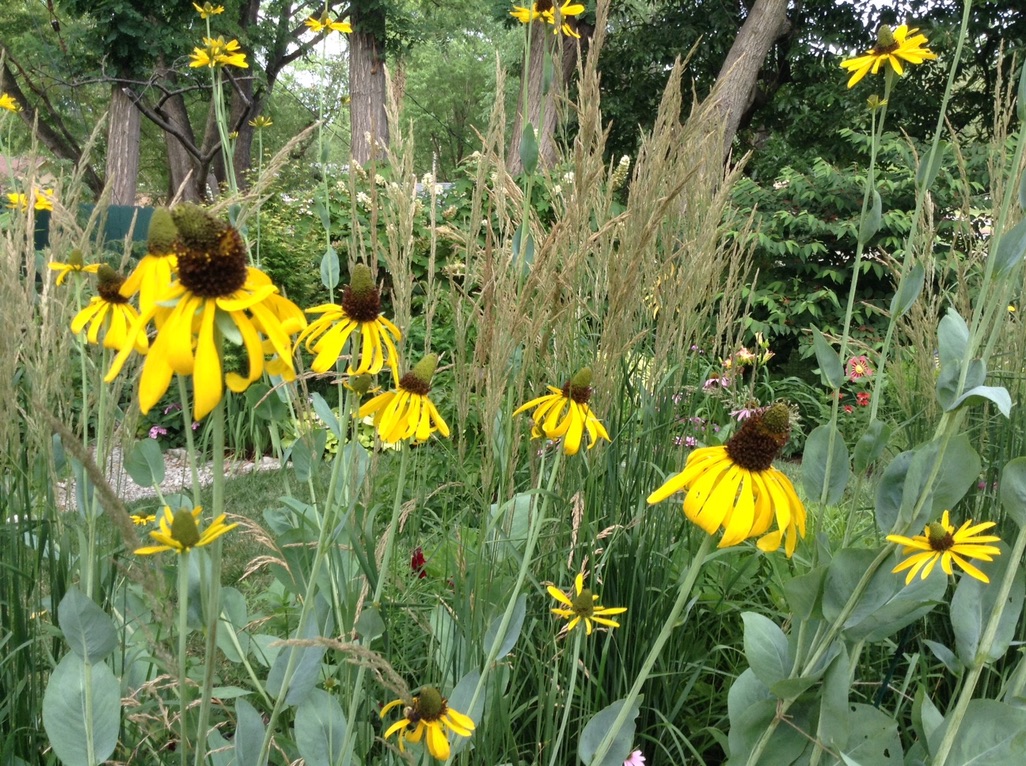
The seeds of this plant are absolutely relished by goldfinches. It’s fun to watch these cute, little yellow birds clasp the sides of the flower stems to feed on the developing seeds. The flower stems do lean a bit after continual exposure to rain, wind, and bird feeding. A couple ways to resolve this is either 1) plant some other plant adjacent to it to provide natural support or 2) do some creative staking with bamboo stakes and jute twine to keep them upright. This plant is definitely worth the trouble though…believe me!
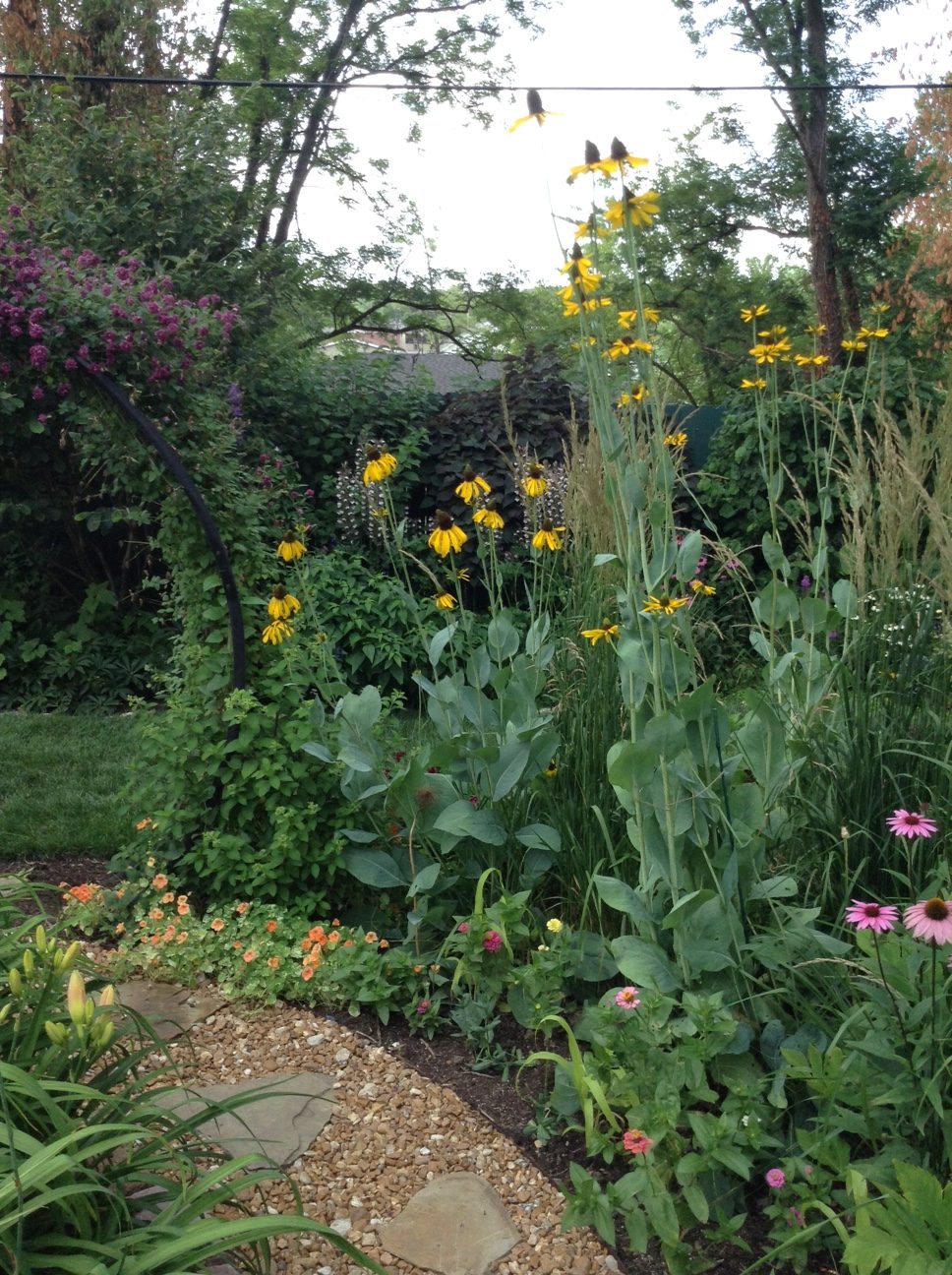
So you may say, “I want some for my garden, but I don’t know where they need to be planted to succeed”. Giant coneflower needs full sun, well-drained, moist to average soils; other than that, it isn’t too picky. I personally like to plant it with ornamental grasses and/or something that is finer-textured like Arkansas bluestar, Amsonia hubrichtii. Or perhaps, you would like to play with foliage color; in which case, you could pair it with something with gold foliage like Mellow Yellow spiraea (Spiraea thunbergii ‘Ogon’) or Sunshine Blue bluebeard (Caryopteris x clandonensis ‘Jason’). At home, I have it interplanted with Karl Foerster grass, Calamagrostis x arundinacea ‘Karl Foerster’, and it gives the area the feeling of tallgrass prairie which is really appealing to me.
Do yourself and the goldfinches a favor and plant some in your garden!